
Everyday Health, Made Easy: Simple Strategies for Feeling Better Without Reinventing Life

Most people want better health but dread anything that sounds like a “program.” The good news? Everyday well-being is often shaped by surprisingly small habits that quietly stack up over time. Below is a set of simple, accessible strategies that slide naturally into daily routines — no overhaul required.
Quick Summary
Small, consistent habits — like gentle movement, better hydration, and intentional rest —create meaningful gains in everyday well-being. Even tiny adjustments compound over time, improving energy, mood, and overall life balance.
Everyday Well-Being Essentials
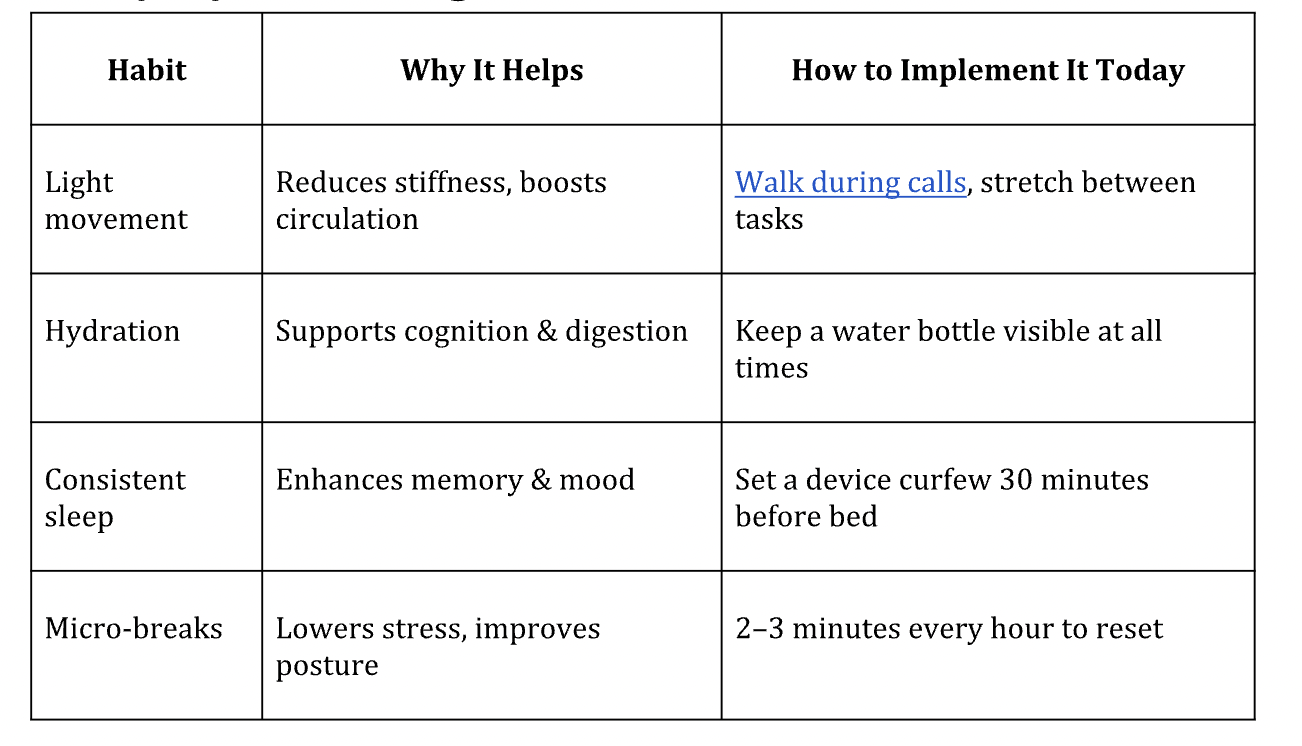
Tiny Upgrades Your Routine Is Missing
Here are a handful of behaviors that carry disproportionate benefits:
● Reach for whole foods first: Not perfect meals — just fewer ultra-processed ones.
● Practice active rest: Gentle activities like strolling, light cleaning, or gardening count as recovery.
● Protect your mornings: Begin with one stabilizing ritual — a glass of water, a stretch, or a moment of quiet.
● Pause before reacting: Emotional health benefits hugely from micro-moments of awareness.
● Expose yourself to daylight early: Helps regulate your circadian rhythm and boosts alertness.
Reset Your Body in Under 60 Seconds
This checklist offers a simple reset sequence when you feel tired, foggy, or tense:
1. Inhale deeply for 4 seconds, hold briefly, then exhale for 6.
2. Roll your shoulders backwards 5–8 times.
3. Drop your jaw and unclench your hands.
4. Sip water (a dehydrated brain works harder).
5. Stand up, straighten your posture, and shake out your limbs.
Do this several times a day and you’ll be shocked at the cumulative effect.
Learning as a Pathway to Mental Well-Being
Mental well-being thrives on novelty, challenge, and personal growth — three things lifelong learning provides naturally. Exploring new subjects, picking up new skills, or returning to school stimulates the mind, strengthens confidence, and fosters a sense of momentum in everyday life. For people pursuing specific career goals, this article explains how a business bachelor’s degree builds competence in accounting, management, communication, and broader business fundamentals. Earning an online degree — in any field — adds flexibility, stability, and long-term professional mobility.
Frequently Asked Questions
Q: Do tiny habits really make a difference?
Yes. Small, low-effort habits compound because they occur more consistently than ambitious, high-friction routines.
Q: How long until I feel improvements?
Some benefits, like reduced tension from stretching, are immediate. Others, such as better sleep or mood improvements, usually show up within days or weeks.
Q: What’s the easiest first step?
Increase your water intake and add 2–5 minutes of movement between sedentary periods. These create a foundation for everything else.
Q: Do I need special equipment or apps?
No. Simple routines, done often, beat complicated tools used rarely.
Building Health Around Your Real Life
Instead of obsessing over perfect routines, focus on adjusting the “settings” of your day: slightly better food choices, slightly more movement, slightly more consistent rest. Health shifts are rarely dramatic — they’re incremental, season-friendly, and adaptable. Think of well-being as a dimmer switch, not an on/off button.
Closing Thoughts
Everyday wellness is built from small, sustainable actions, not giant lifestyle flips. Whenguided by awareness and consistency, even minor adjustments support better mood,clearer thinking, and steadier energy. Start with one or two strategies, keep them simple, and let them evolve with your life rather than against it.
Experience personalized, in-home rehabilitation with Magnolia Physical Therapy & Wellness and discover why we’re Atlanta’s top choice for mobile physical therapy!
Guest Author is: Emily Graham